
Why ReadySetServe
Because knowing the standard and handling the moment are two different things.
QSR teams make hundreds of small decisions that shape the guest experience. ReadySetServe.app gives them realistic practice with those decisions while giving managers clearer visibility into the competencies behind them.
An extension of your existing training
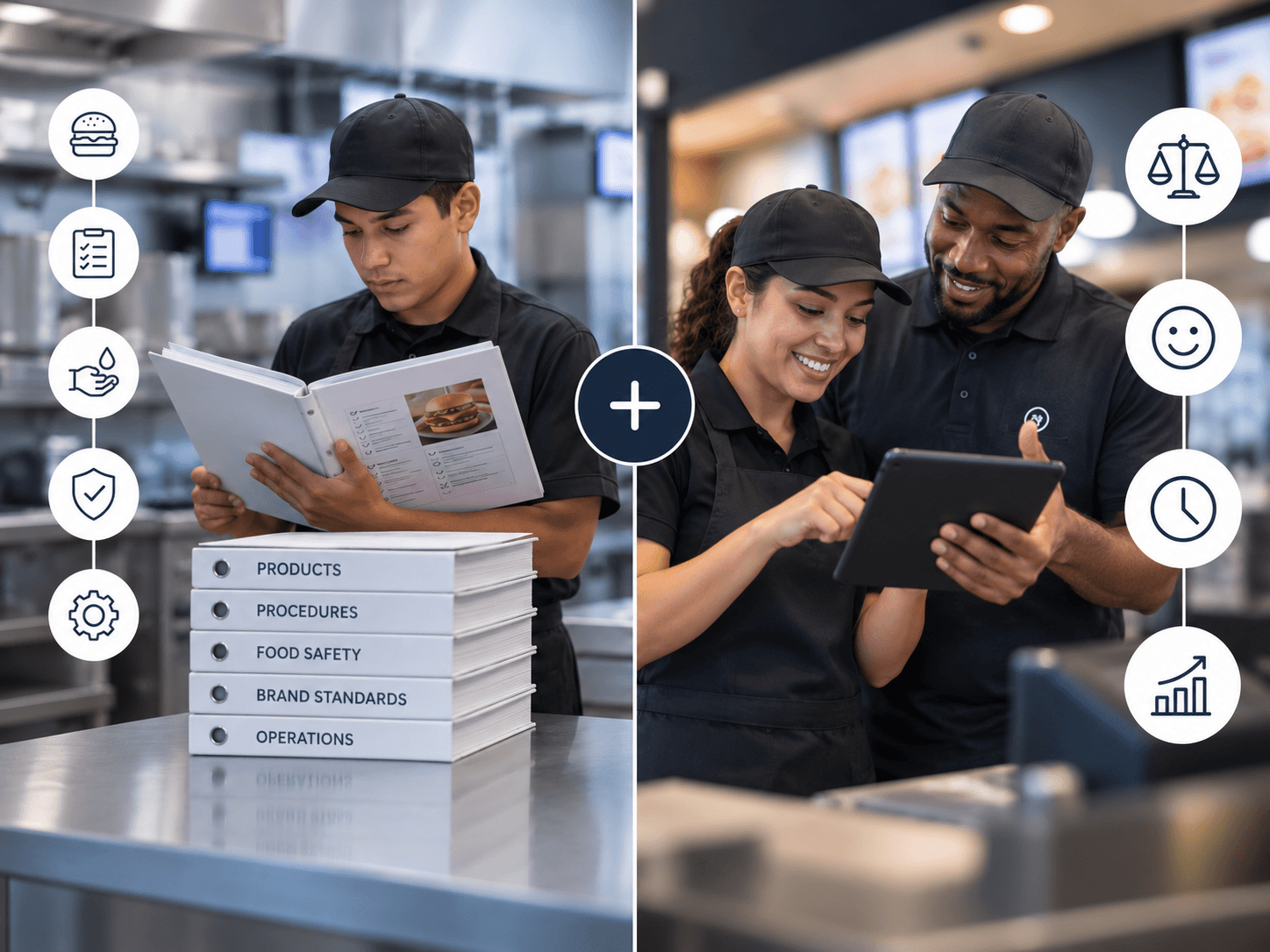
Keep the training that defines your brand. Add practice for the moments that test it.
ReadySetServe.app does not replace franchise onboarding, operational procedures, product training, food safety, or brand standards.
It extends that foundation with practice focused on customer-facing judgment, service recovery, communication, pressure, prioritization, escalation, and real shift decisions.
The standard stays yours. ReadySetServe.app helps teams put it into practice.
Practice for the real shift
The gap usually appears in the moment.
Training can explain what good service looks like.
A real shift adds pressure: an upset guest, a delayed order, a growing line, competing priorities, an inexperienced team member, or a supervisor deciding when to step in.
We give teams a safe place to practice those decisions before the consequences are real.
Practice the moment. See the signal. Coach the gap.
From practice to coaching
Turn everyday decisions into actionable readiness insight.
Step 1
Practice
Team members work through realistic QSR service and operational situations.
Step 2
Respond
They decide how they would handle the moment instead of simply recalling information.
Step 3
See
Responses reveal patterns across communication, judgment, composure, guest recovery, escalation awareness, and operational prioritization.
Step 4
Coach
Managers can focus development where support is actually needed.
Step 5
Build
Repeated practice and coaching create a clearer picture of readiness over time.
See more than completion
A completed module doesn’t tell you what to coach next.
We turn scenario responses into competency signals managers can use.
Instead of stopping at: Did they finish the training?
Managers can begin asking:
- Where are they strong?
- Where is support needed?
- What should we coach next?
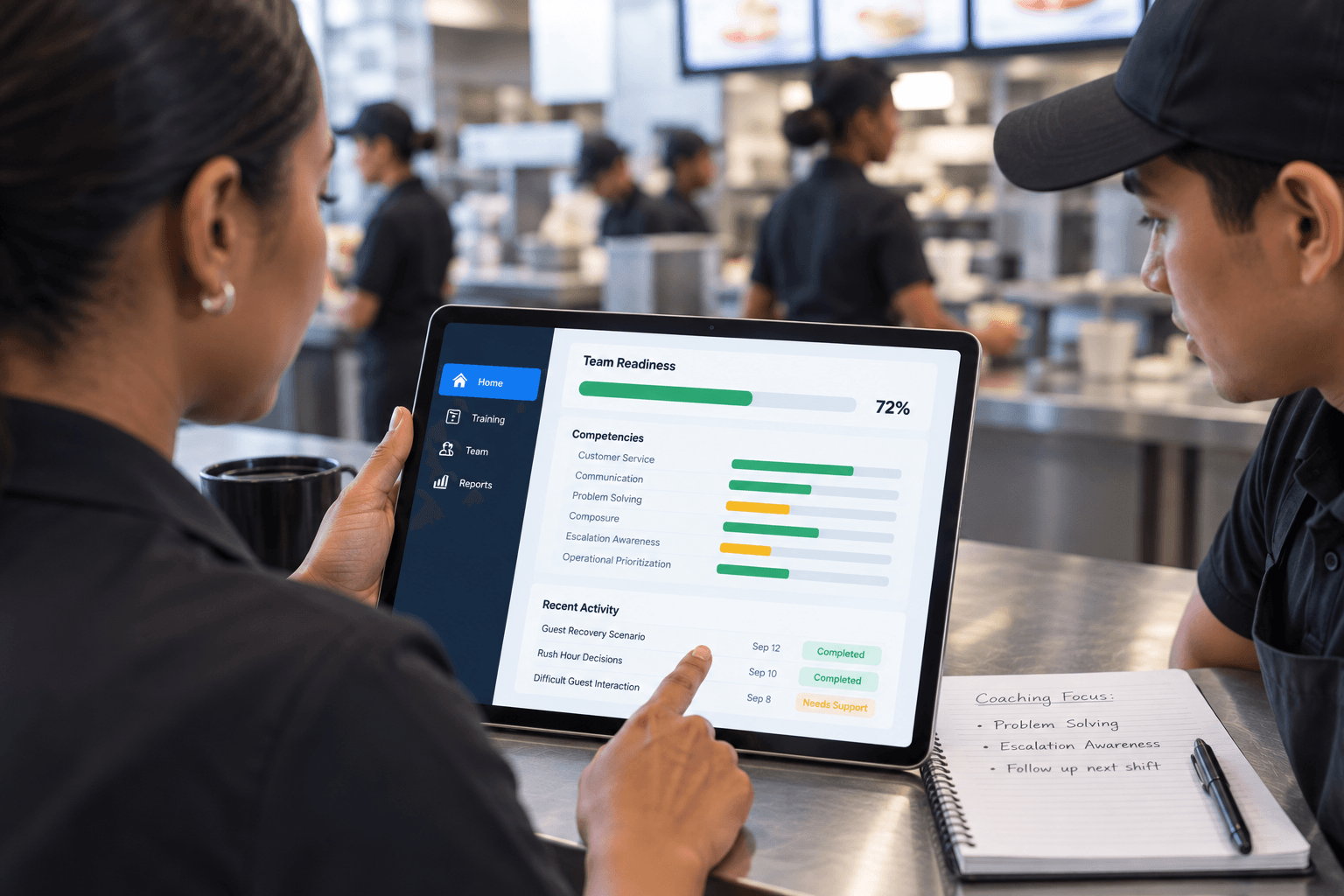
When managers can see the gap, coaching becomes more specific, timely, and useful.
Learning in the moment
Feedback shouldn’t have to wait for the next training session.
Our scenarios give team members immediate feedback after a decision so the learning stays connected to the situation they just worked through.
That makes reinforcement quick, relevant, and easier to repeat without scheduling another classroom session.
Built for QSR operations
Development shouldn’t require taking the whole team off the shift.
Live training has an important place, particularly during onboarding and franchise-specific instruction.
But repeated reinforcement becomes harder when people work different schedules, locations operate at different volumes, and managers already have competing priorities.
We bring development to the team member so reinforcement can happen more consistently without requiring everyone to be in the same room at the same time.
On demand
Practice when development fits.
Consistent
Use the same readiness approach across teams and locations.
Visible
Managers retain insight into development and coaching needs.
Prepared teams. Better moments.
The guest experiences the decision, not the training certificate.
When a difficult service moment happens, the customer sees how the team responds.
Do they communicate clearly?
Do they recover the situation?
Do they recognize when to escalate?
Can they prioritize when several things are going wrong at once?
We develop the competencies behind those moments so teams are better prepared when the pressure is real.
Better-prepped teams. Better-served guests.
Before the first shift
See how candidates think before you see them work.
Traditional hiring gives you information about experience and interview performance.
Candidate Readiness adds realistic QSR situations so operators can observe another useful signal: how a candidate approaches judgment, communication, service pressure, and decision-making.
It does not replace the interview.
It gives the hiring manager more information to work with.
From candidate to stronger shift
One readiness journey across the team.
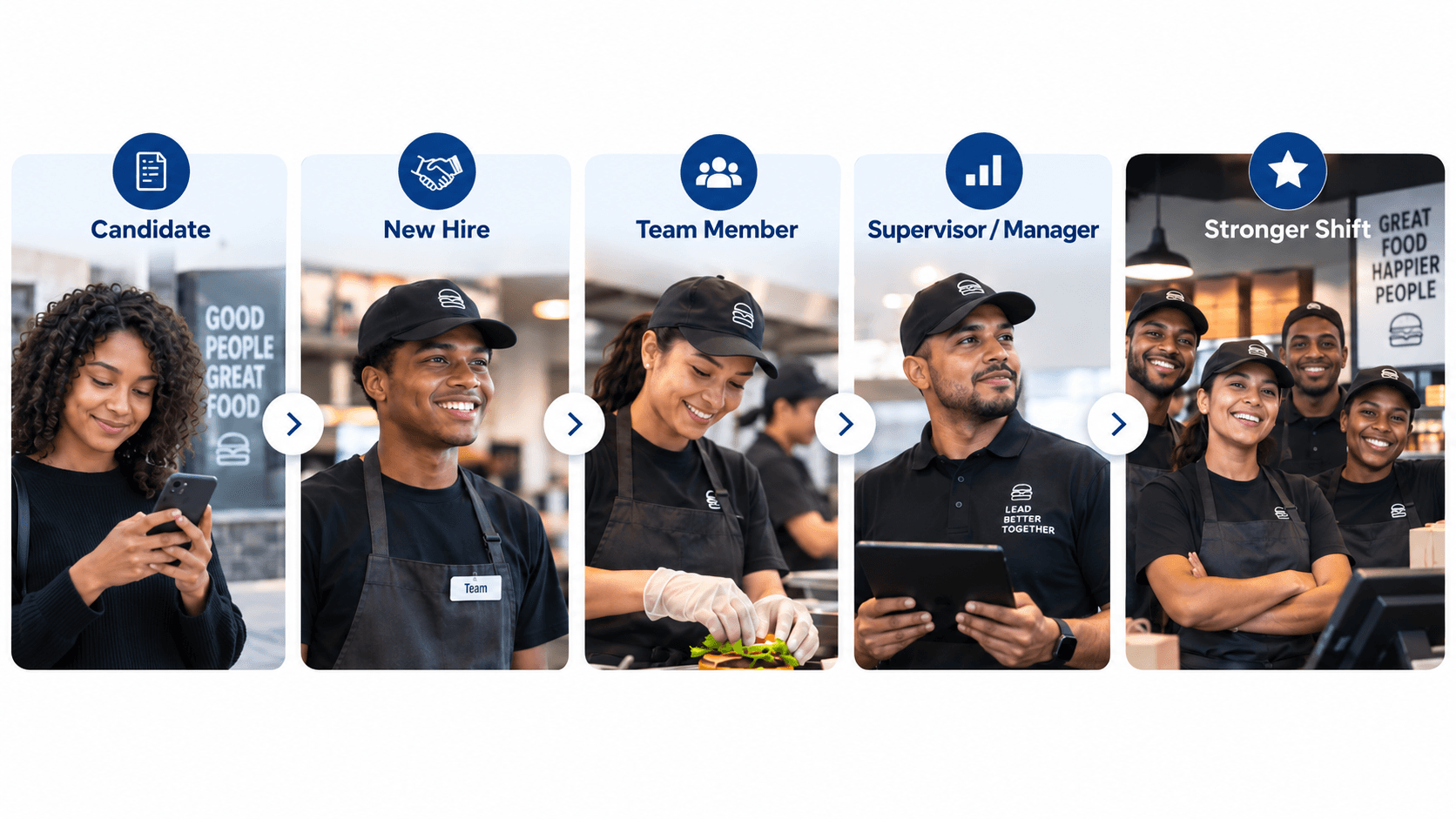
Use one readiness approach to support hiring, development, coaching, and progression as responsibility grows.
As roles change, the scenarios and competencies change with them. The result is a clearer development record across the workforce.
Ready when the shift gets real
Make development easier to scale and readiness easier to see.
Give teams practical experience before the difficult moment happens. Give managers clearer signals when coaching is needed. Give operators a stronger way to build service readiness across the workforce.