
QSR Workforce Readiness
The QSR workforce-readiness platform for hiring, development, and stronger shifts.
ReadySetServe.app helps Quick Service Restaurant operators assess candidate judgment, prepare teams with realistic service and operational scenarios, and give managers clear competency insight into who’s ready, where the gaps are, and what to coach next.
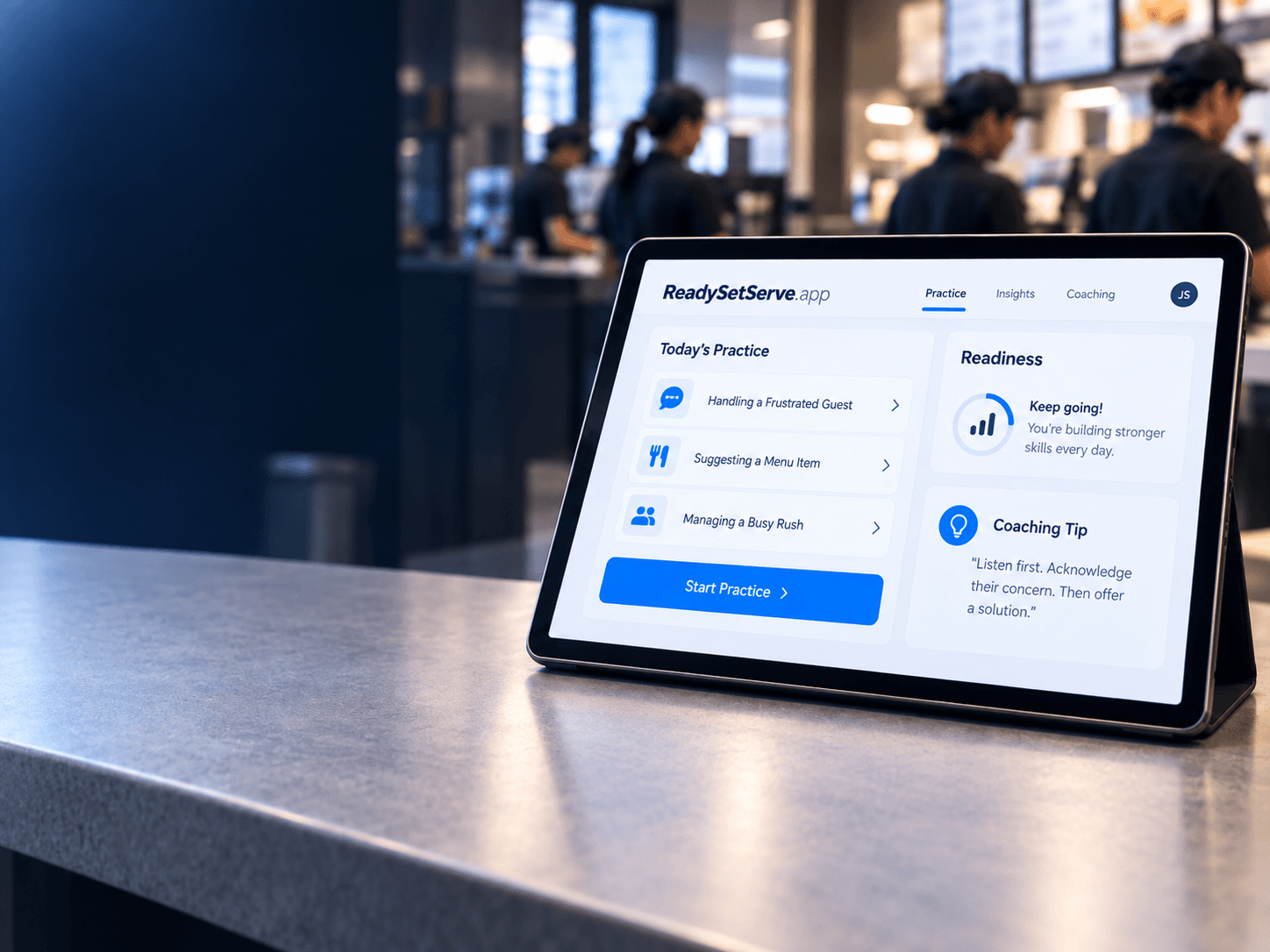
Built for the real shift
Build QSR teams that are ready for the rush.
Training can be complete. The readiness gap can still be there.
Your teams can know the menu, systems, procedures, and brand standards and still struggle when a guest is frustrated, the line is growing, priorities collide, or someone has to make a judgment call under pressure.
Those are the moments that shape the guest experience.
Knowing the standard matters. Applying it under pressure is what the guest experiences.
Service shows up everywhere
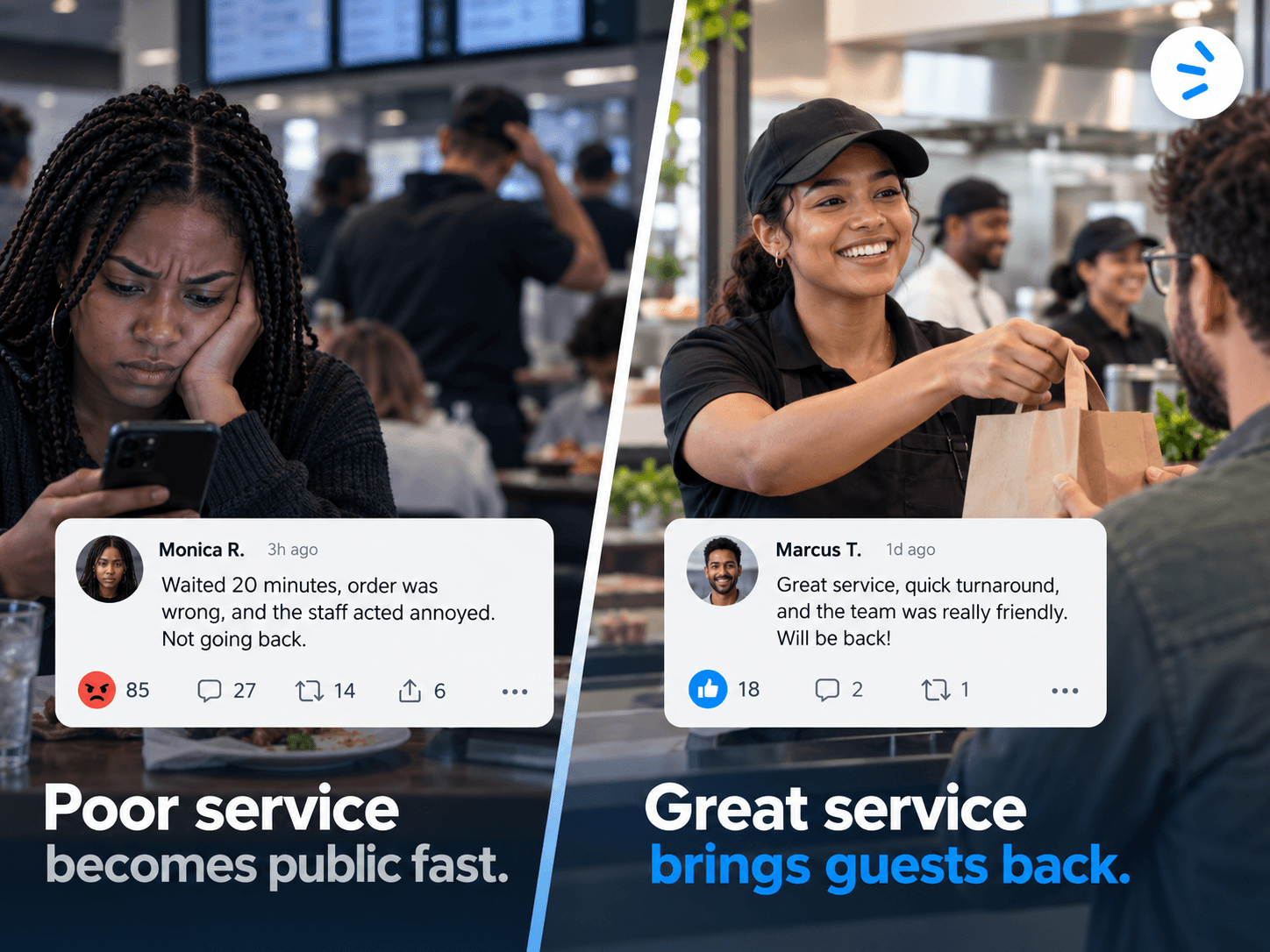
Poor service becomes public fast.
A difficult interaction no longer stays inside the restaurant. It can become a review, a social post, a screenshot, or a story shared with other customers.
We help operators reduce preventable service breakdowns by preparing teams for the moments that expose gaps in judgment, communication, composure, service recovery, and operational awareness.
That isn’t always a training-completion problem. Sometimes it’s a readiness problem.
What operators get
Stronger shifts without adding more training friction.
ReadySetServe.app gives operators a scalable way to reinforce service readiness, support better coaching, understand development needs, strengthen people decisions, and assess candidate judgment before day one.
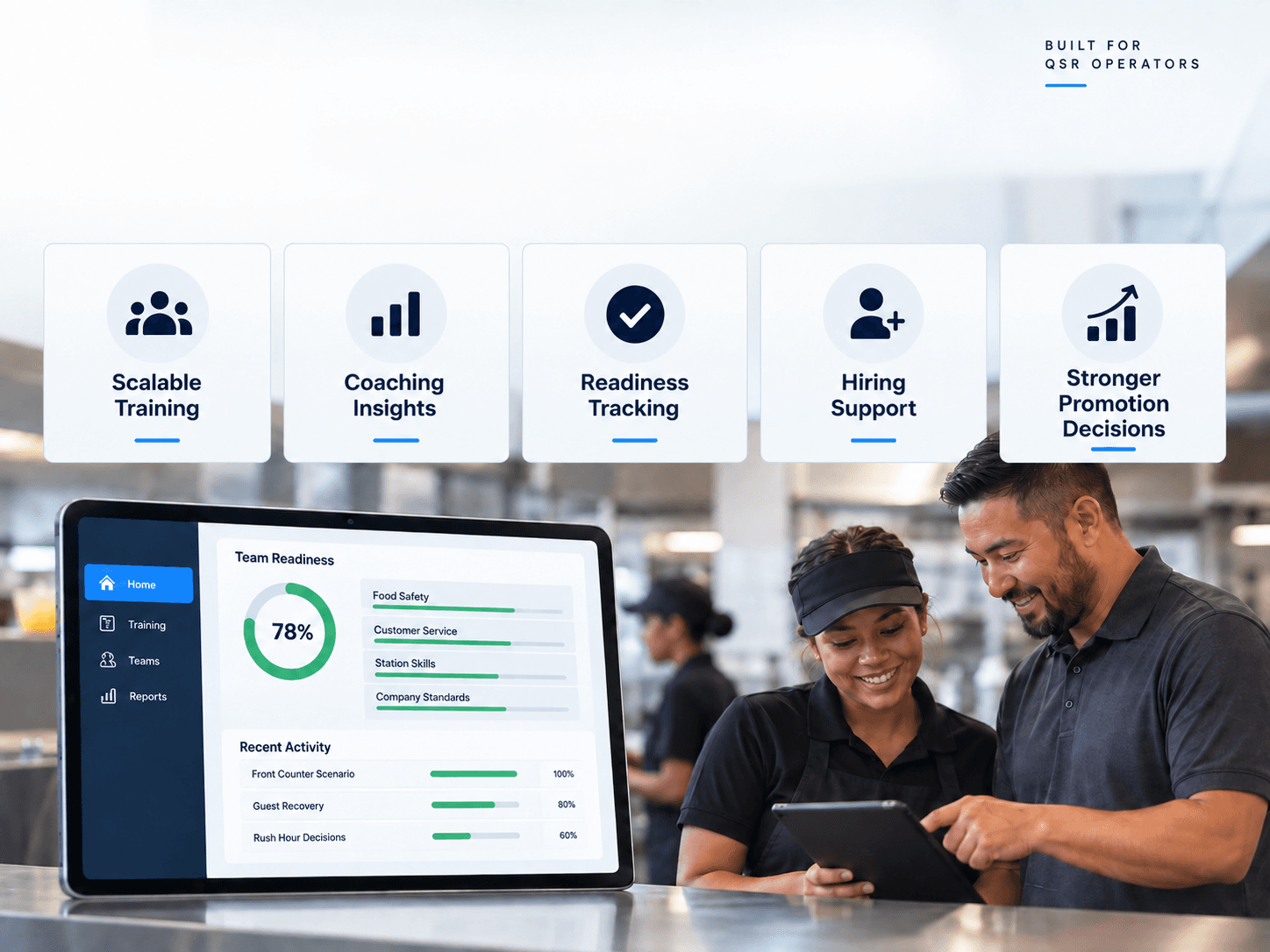
Give teams relevant practice while giving managers clearer signals about where support and opportunity exist.
Complement. Don’t replace.
Franchise training builds the standard. ReadySetServe.app strengthens the real shift.
Your existing training covers the brand, products, systems, procedures, food safety, and operating standards.
ReadySetServe.app extends that foundation with repeated practice for the customer-facing and operational moments that are harder to prepare for consistently at scale.
Your standards already define the experience. We help your teams deliver it.
See Why It WorksTry it
See how readiness shows up in a real shift decision.
A guest is frustrated. The line is moving. Your team has competing priorities.
What should happen next?
Choose a response and see how our scenarios connect everyday decisions to the competencies managers need to understand and coach.
Demo scenario
A guest returns to the counter during a lunch rush because their order is missing a side item. The line is moving, the guest sounds frustrated, and your teammate is waiting for you to confirm the next order.
What response shows the strongest service readiness?
Strong choice. This balances ownership, communication, and service flow under pressure. Readiness skill: Guest Service Judgment.
Selected feedback
Strong choice. This balances ownership, communication, and service flow under pressure.
Strongest response
B. Apologize, verify the missing item, get it corrected, and let your teammate know you will return to the next order right after.
Readiness skill
Guest Service Judgment
The strongest response acknowledges the guest, fixes the immediate issue, and keeps communication clear with the team.
From response to insight
Don’t just see the score. See where the gap is.
Completion tells you someone finished.
A score tells you how they performed.
We go further by turning scenario responses into competency signals that help managers understand strengths, development needs, and where coaching can have the greatest impact.
Your team is already giving you signals. We help you see them.
Readiness starts before day one
Make the interview one signal, not the only signal.
A résumé can tell you where someone has worked. An interview can tell you how they describe themselves.
ReadySetServe.app adds another signal: how they respond to realistic QSR situations involving guests, pressure, communication, judgment, and competing priorities.
Candidate Readiness gives operators more information to support hiring decisions before a new team member steps onto the floor.
Quick. Relevant. Impactful.
Turn training into stronger shifts.
Give teams realistic practice. Give managers clearer insight. Give operators a more scalable way to strengthen service readiness across people and locations.